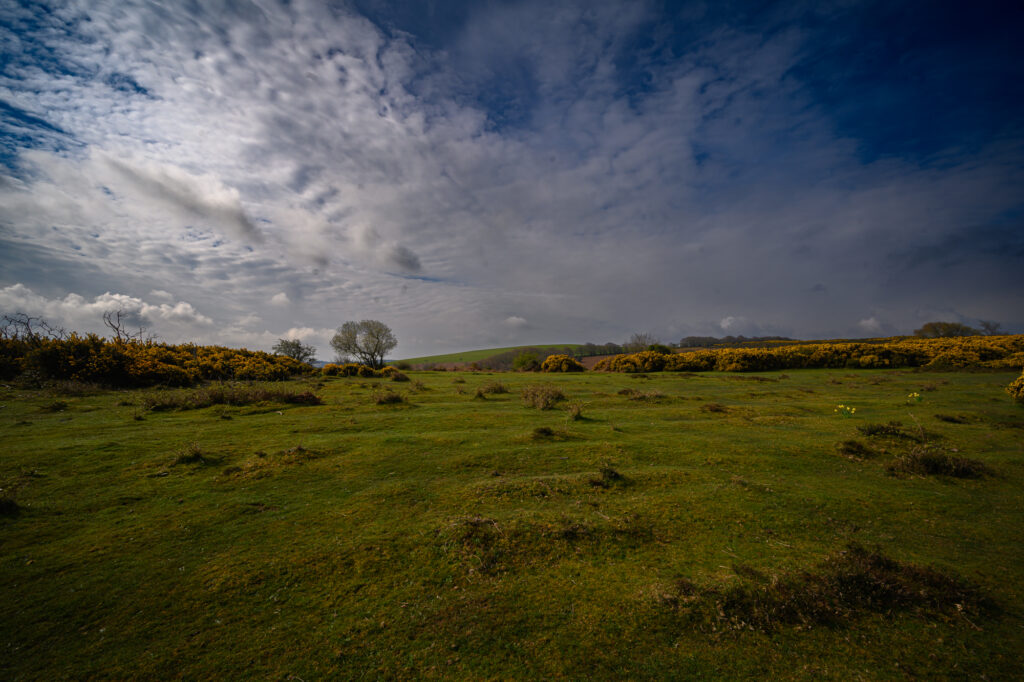
When I walk across North Hill above Minehead, the landscape feels calm and quiet. Grass sways in the wind. Birds call from somewhere out of sight. The sky often feels vast and restless over the moor. At first, it seems like an ordinary place, just open ground on the edge of Exmoor. But the longer I stay, the more I realise the land holds a deeper story.
During the Second World War, this hill was far from peaceful. In 1942, the military took over the area and turned it into a training ground for armoured fighting vehicles. Farms were cleared, concrete platforms were built in the woods, and firing ranges stretched across the moorland. Tanks rolled across the hillside as crews prepared for combat.
Today, the noise is gone. Grass has grown back. The land feels natural once more. But if you look closely, the past hasn’t disappeared. The ground still shows shallow dents where tank tracks pressed into the soil. Concrete structures hide in the woods. The traces are quiet, but they’re still there.
One of my photos shows the open moorland beneath a restless sky. Gorse lines the horizon, and the ground looks a bit uneven, as if something once disturbed it. The land seems peaceful, but it carries scars that are easy to miss unless you slow down and look carefully.
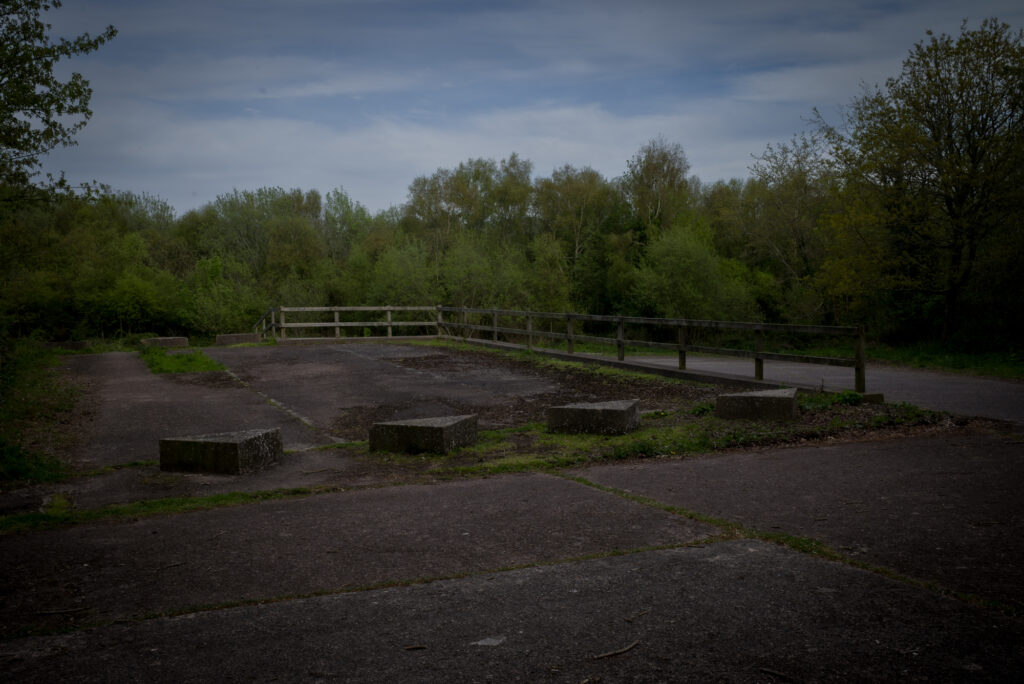
Another photograph shows a concrete loading platform deep in the woodland. This was once part of the tank marshalling area. Crews would refuel here and prepare ammunition before driving their vehicles to the firing ranges. Today, the structure sits quietly beneath trees. Moss and leaves soften its edges, but the concrete’s geometry still reveals its purpose.
As I walk deeper into the forest, the atmosphere changes. The open sky fades away, and tall trees rise all around. Light filters through mist and branches. The air feels thick and still. The photos move from open ground to enclosed woods, from the clear signs of wartime training to nature’s slow return.
One photo was taken early on a misty morning. Tall pines stand in soft fog while low winter sunlight shines through the branches. The forest floor is covered with needles, bracken, and uneven earth. At first, it looks untouched, but a closer look reveals shallow lines and compacted ground. These are the subtle remains of tank tracks pressed into the land during wartime exercises.
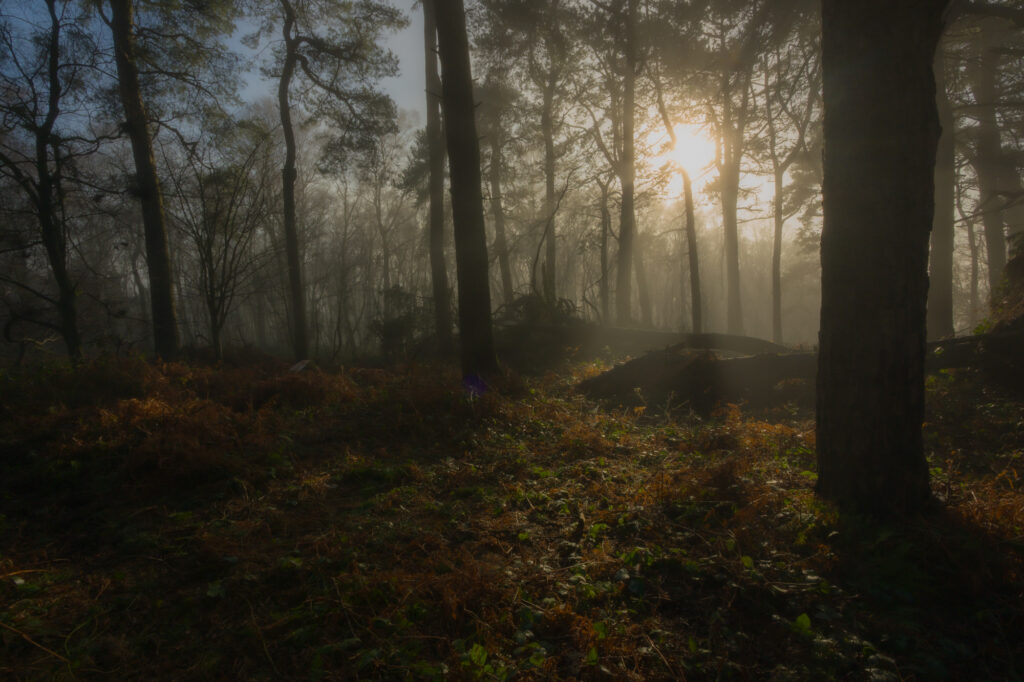
Armoured vehicles once moved across this hillside. Their engines would have echoed through the woods above the Bristol Channel. Now there is only silence and soft light. The landscape has taken in the disturbance, but it hasn’t erased it.
When I photograph places like this, I think about how landscapes hold memory. Walking across North Hill is not simply a physical experience. It is also an emotional one. Certain places feel open and exposed. Others feel enclosed and reflective. These sensations come before any clear thought about history.
The open moor gives a feeling of vulnerability under the wide sky. During the war, a radar station stood nearby, watching for low-flying aircraft. Even though the equipment is long gone, the hill still feels watchful and exposed. In contrast, the woods feel sheltered. Sounds are muffled. Light breaks through in fragments. This shift between spaces shapes how I photograph the area.
Often, as a photographer, I walk without a strict plan, letting the landscape guide me. Some paths that once carried tanks now lead walkers and ramblers, while concrete roads built for military vehicles have become quiet walking trails. Moving slowly through the area, I start to notice small details that might otherwise go unnoticed.
History also shapes how I see things. Archival records show that by 1943, more than 100 units had trained here. In 1944 alone, forty American armoured units used the Minehead range. Tanks even drove along the town’s seafront, their tracks tearing up roads and railings. Firing ranges stretched more than a kilometre toward the sea.
Knowing this background changes how I read the photos. The concrete platforms and open fields no longer stand alone; they’re part of a much bigger story about preparing for war.
But the most powerful moments in these images often come from small details. In one photo, a low concrete edge covered in moss appears at the bottom of the frame. It’s easy to miss, yet it draws the eye. That quiet fragment reminds us that the structure still exists beneath the plants. Nature hasn’t erased it. Instead, it has slowly absorbed it.
Another woodland image shows faint tracks across the forest floor and fragments of old concrete. Trees now stand tall where tanks once passed. Moss softens hard edges. Light filters through the leaves. The place feels calm, but the ground still carries the weight of what happened there.
I’m interested in the balance between history and recovery. The landscape isn’t frozen in the past. Plants grow. Roots break through old soil. The seasons change the land. Human activity, plans, weather, and time all interact.
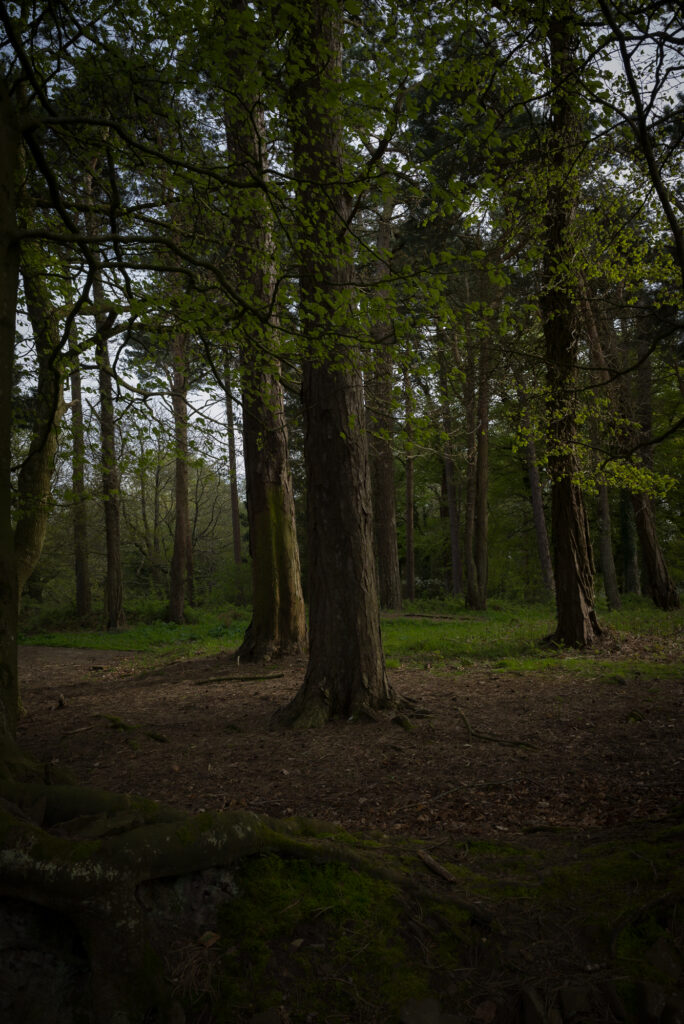
By walking slowly through the area, I reveal this relationship. My goal isn’t to find dramatic scenes but to focus on subtle changes in texture, light, and structure. Through these details, the land becomes readable.
Photography lets me translate that experience into images. The camera doesn’t recreate the past directly. Instead, it captures the atmosphere of a place shaped by history. The photos sit somewhere between documentation and reflection.
The woodland scenes challenge the heroic image of mechanised warfare. Tanks were built for mobility, protection, and firepower. Standing still and strong, the vertical tree trunks appear in these images. Sunlight breaks through the leaves. Plants reclaim ground once compacted by steel. Quietly, the forest pushes back against the idea of constant movement and conflict.
North Hill is both a historical site and a living landscape. It’s a place where wartime preparation once took place and where nature has slowly come back, revealing this dual identity.
When I photograph here, I know the camera can’t separate these layers of time. Instead, it holds them together. The land stays peaceful, yet it still carries the marks of its past.
Tracked Earth, Silent Sky reflects that tension. The photos show a landscape that appears calm yet carries traces of movement, conflict, and memory. The grass grows again. The trees stand tall. But beneath them, the ground still remembers.
The full editorial and associated images are available for publication in your magazine, journal, or platform. Request tailored versions in different tones or formats. Book the author as a guest speaker for your event or programme. Contact the Author.
All images and text on this page are protected by copyright law. No part of this material may be reproduced, distributed, published, transmitted, modified, or used in any form or by any means, in whole or in part, without prior written permission. All rights reserved.