Preface
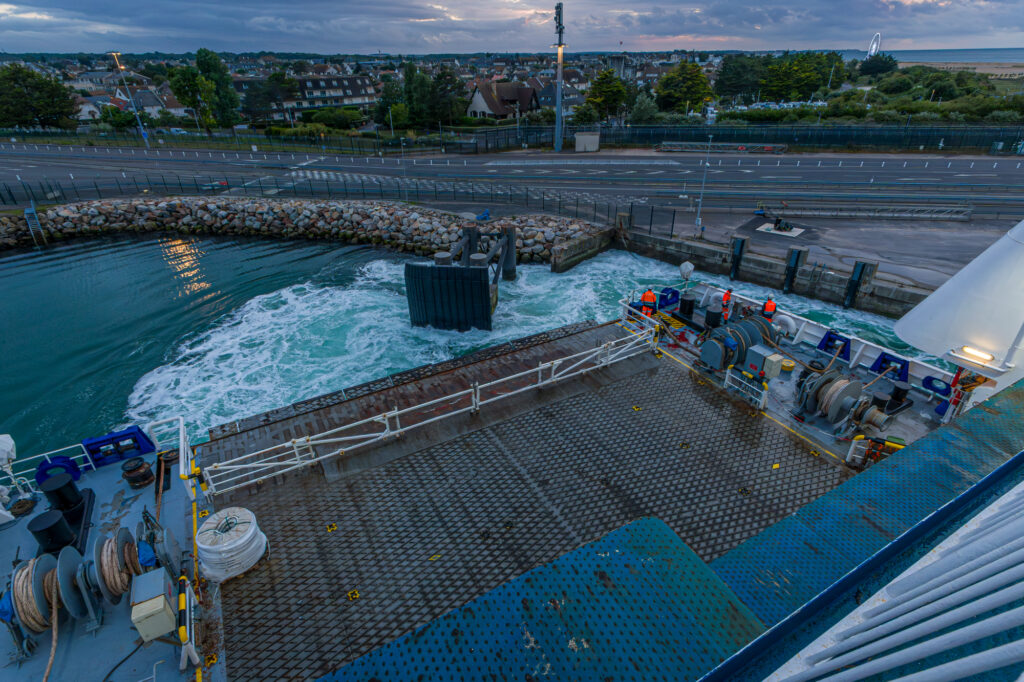
The ferry Mont St Michel nears Ouistreham under a darkening evening sky. Its stern ramp, worn by salt and use, lowers toward the harbour as the winches work hard. Propellers spin. Dock workers in bright orange stand ready between sea and land. The town beyond stays quiet, bathed in fading light. Nearby, a wheel turns slowly by the beach. Arrival feels like a carefully timed dance.
I start here because this moment captures the article’s main idea. I look at tourism through a posthuman perspective, based on ongoing photographic work at Ouistreham’s ferry port on the Normandy coast. I don’t see the port as just a passing place. Instead, I view it as a complex network where infrastructure, labour, atmosphere, memory, and ecology come together. Photography isn’t just a way to observe from a distance; it’s how I take part in this environment.
Disembarkation happens in a familiar way. Vehicles unload, and passengers hurry inland. The port’s design promotes smooth, efficient movement. Concrete corridors, painted lines, steel ramps, glass terminals, lighting grids, and security barriers guide people precisely. Usually, these details fade into the background. I choose to notice them. I slow down and focus on the worn paint, the shine of wet pavement, the shapes of beams, and the hum of ventilation. Infrastructure shapes how we see and feel the place.
This approach builds on a move from postmodern to posthuman ideas in photography. While postmodernism challenged fixed meanings, posthumanism asks for more empathy, feeling, and responsibility in connected worlds. When I lift my camera in Ouistreham, I’m not trying to control the scene. I see myself as part of a network of human and nonhuman forces. The image doesn’t come from outside; it grows from these relationships.
Here, photography is an experience, not just a finished picture. When I focus on the peeling paint of a ferry ramp or the lattice of a pedestrian bridge, light, salty air, metal, vibration, and camera technology all come together. The camera picks up details my eye can’t see. The wind shifts my balance, and the moving vessel shakes the tripod. Control spreads across my body, the camera, and the surroundings. The photo captures this interaction, an exchange of energy, not a fixed snapshot.
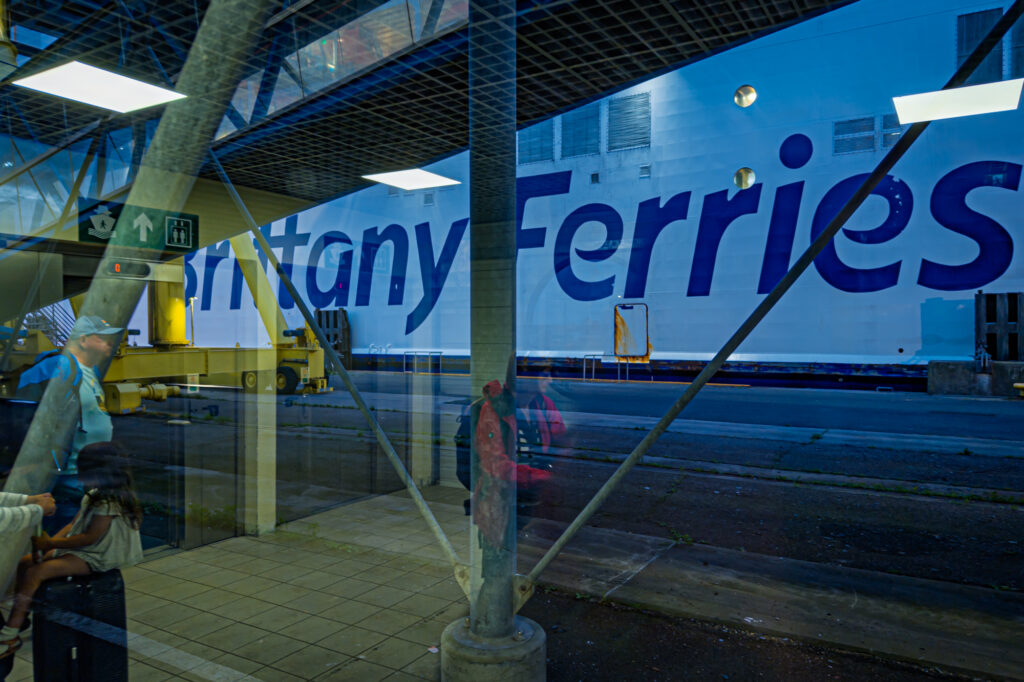
Another scene takes place inside the terminal’s glass corridor. Passengers wait while the Mont St Michel’s hull looms outside. Silhouettes blend with industrial signs and beams. Interior lights reflect on the glass, mixing sea, ship, and building. The image blurs the line between inside and outside. Reflection and transparency mix together. The corridor becomes a place where movement stops, and memories of the sea stay alive, just before reaching land.
Material philosophy helps me better understand these moments. Infrastructure isn’t just passive support. Steel, asphalt, glass, and concrete last and wear down over time. They push back and react. Morning light bends over ferry barriers and spreads across wet surfaces. A rusting bollard covered in seaweed shows how industrial shapes and marine life live together. The metal holds its form while nature builds up. I don’t romanticise decay. I focus on the conversation between materials, their histories, and how they adjust to one another.
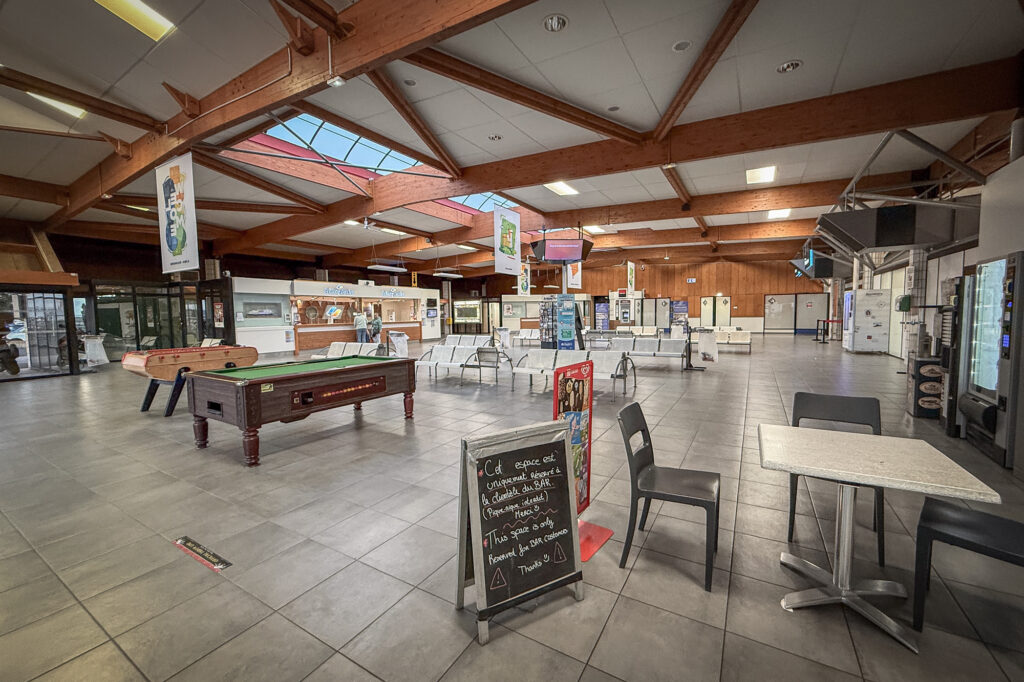
Feelings go beyond just one person. Standing in the passenger terminal at dawn, I see glass doors shake in the wind. The hall is nearly empty. Vending machines glow softly. Pool tables and table football sit unused. A chalkboard stands in a small café area. Outside, ferries get ready for another trip. The mood isn’t just nostalgia or sadness. It’s a lively balance where machine vibrations, weather, architecture, and bodily senses come together. Here, tourism works as a feeling system. Emotion flows through the infrastructure, not just inside people.
Other photos support this idea. The ferry ramp stirs water against the harbour wall. I focus on movement and edges rather than making the ship look like a heroic symbol. Through terminal glass, beams, signs, interior light, and my faint reflection, layers overlap. The image reflects on itself. The photograph shows how it was made.
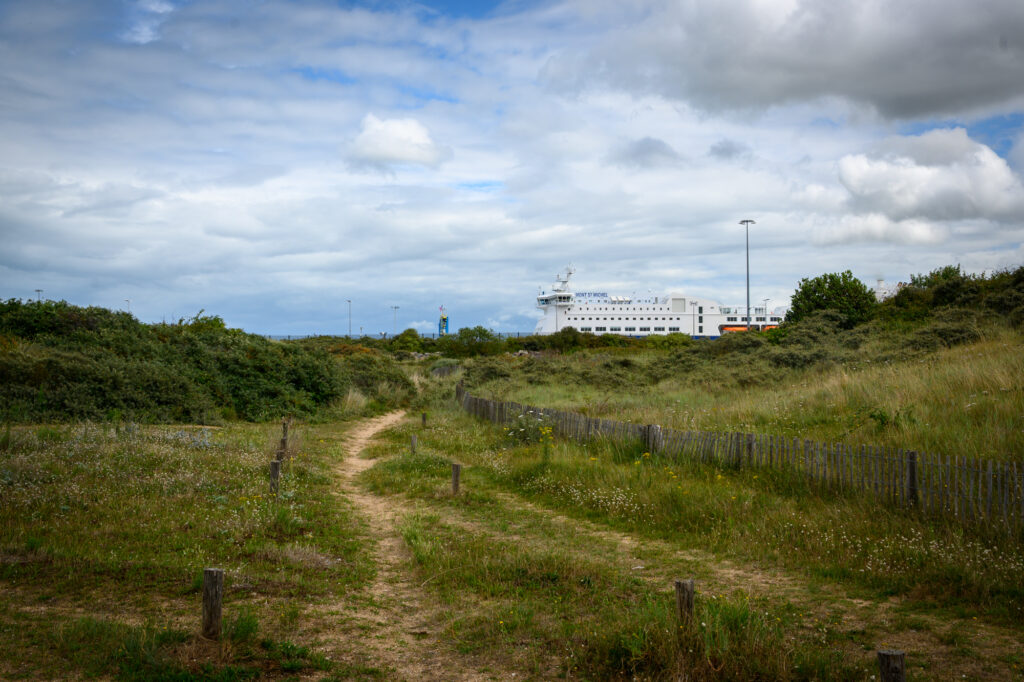
In the waiting hall, what seems like stillness hides ongoing activity. Maintenance goes on. Anticipation builds. Waiting isn’t emptiness but a stretch of time. A winding path through the dunes leads to a ferry far away. Grasslands, fences, sky, and a ship balance the scene. The ship brings a human rhythm to the coastal environment without taking over. Land and sea, leaving and coming back, stay in balance.
Through these studies, I connect my work with the ideas of slow tourism. Slowness isn’t just spending more time in one place. It means shifting how we pay attention. I stop looking for spectacle or authenticity. Instead, I focus on tuning in. Infrastructure, labour, wear, vibration, and ecological stress all become part of the picture. The port turns into an aesthetic environment, not just a transit point.
Ethics are at the heart of this work. Posthuman ideas see responsibility as the ability to respond within connected systems. I photograph workers painting ramps at low tide, seagulls feeding near customs posts, and moss growing on bollards. These details highlight care and upkeep. Tourism infrastructure appears as a living system that requires constant repair. The photo becomes a simple act of witnessing, not a product to sell.
I also see Ouistreham as a place with many layers. Ferry routes hold memories of wartime departures, economic migration, leisure trips, and marine life. Each photo acts as a small ethnographic record of these encounters. Together, they create an archive of connections that challenge simple stories about sustainable tourism.
Sustainability can’t depend only on policies or carbon numbers. Without changing how we see things, these measures stay abstract. Posthuman photography helps make that change by moving away from the idea of the lone traveller and focusing on relationships. The photo stops being a trophy and becomes a record of shared time and material exchange.
People often experience Ouistreham quickly. Cars drive through in minutes. I choose to stay longer. Wet pavements reflect the terminal’s light. Steel surfaces show salt marks. Waiting areas hum with hidden movement. By slowing down, the infrastructure reveals its beauty and deeper meaning.
In practising posthuman photography at Ouistreham, I combine theory with hands-on visual work. I see infrastructure as an active partner, not just a neutral background. I present slow tourism as an ethical way to engage with multiple species and material worlds. My goal isn’t to romanticise the port but to stay with it, observe carefully, and imagine tourism as a connected practice based on shared vulnerability and constant change.
Publish the full editorial and associated images in your magazine, journal, or platform. Request tailored versions in different tones or formats. Book the author as a guest speaker for your event or programme. Contact the Author.
All images and text on this page are protected by copyright law. No part of this material may be reproduced, distributed, published, transmitted, modified, or used in any form or by any means, in whole or in part, without prior written permission. All rights reserved.