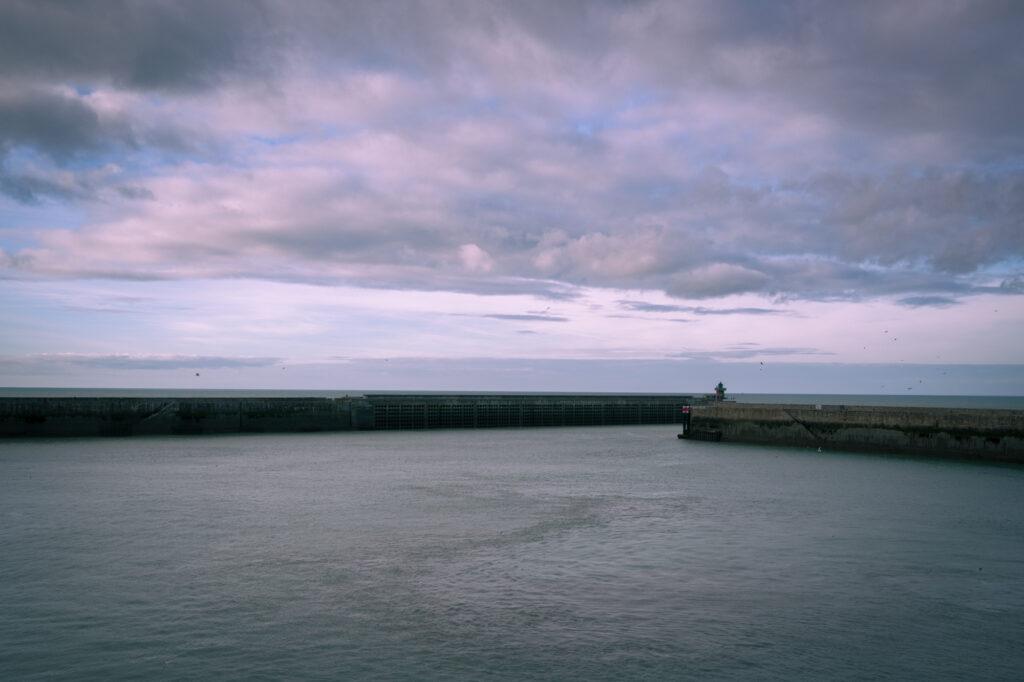
I arrived in Dieppe without a real plan, which feels like the only honest way to return to a place you once knew. The ferry from Newhaven crossed the Channel on a quiet grey morning, the sea carrying a steady indifference that only centuries of time can bring. When the harbour came into view, I felt something strange. Not nostalgia. Nostalgia feels too neat, too polite. What I felt was a mix of recognition and suspicion, as if the town and I were both wondering if the other had aged well.
Thirty years is long enough for memory to become an unreliable narrator.
I started walking without any particular direction, which feels like the only proper way to explore a city. The Dérive asks you to let go. You don’t pick the street. The street picks you.
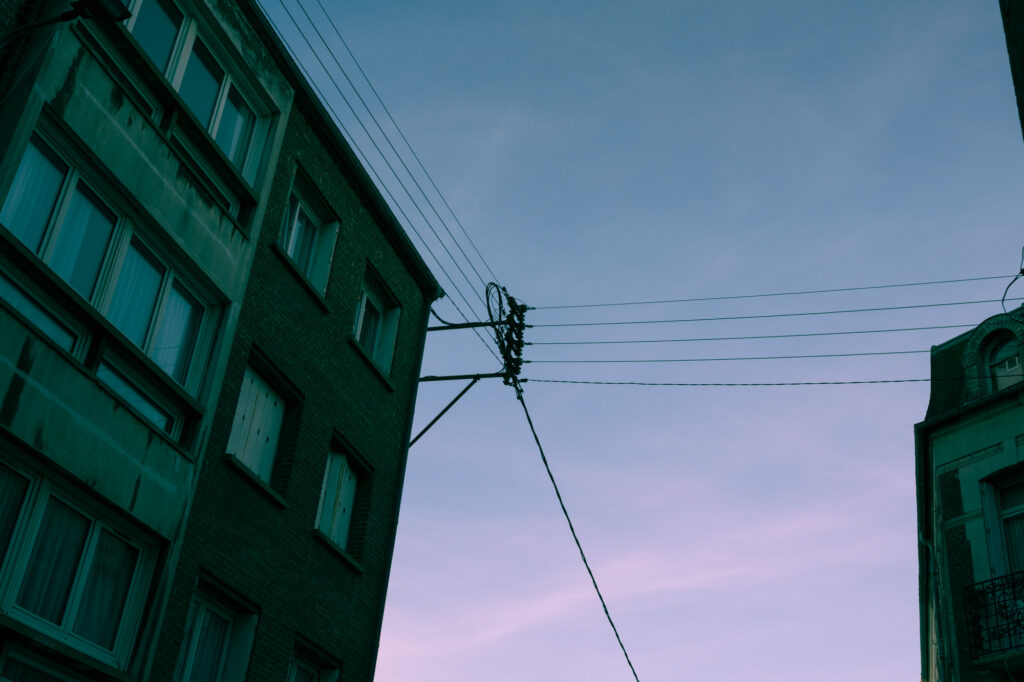
The first thing I noticed was silence. Not the absence of sound, but the kind of quiet you find in early coastal towns. Cables stretched across the narrow streets like loose lines on a music sheet. The buildings leaned toward each other like old neighbours. I looked up at the wires crossing the pale sky and thought about how cities show themselves in their tensions. Lines pulling against gravity. Structures holding each other up more by habit than by design.
At fifty-five, I don’t rush through places anymore. When you’re young, you travel to discover. When you’re older, you travel to confirm.
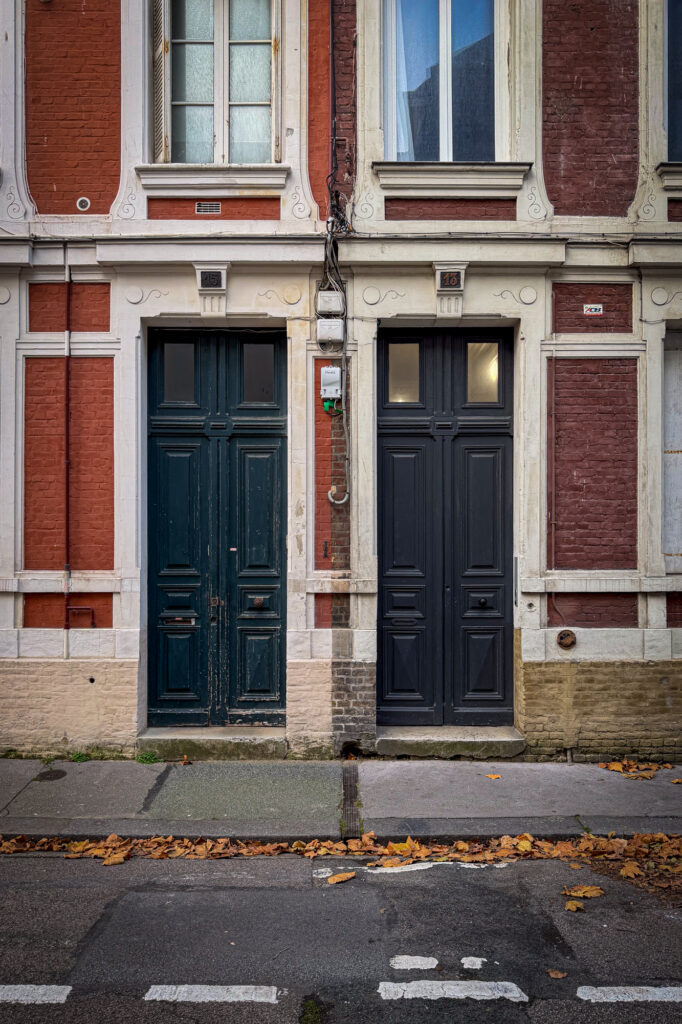
Next, the doors caught my eye. Two tall doors side by side on a brick wall, almost the same but not quite. One was worn, its paint peeling in small rebellions. The other was freshly painted, neat, and almost proud. Thirty years ago, I might have snapped a quick photo and moved on. Now I stood there for several minutes. Time had painted its own picture. One door is fighting decay. The other accepts it gracefully.
As an audio and visual practitioner, I spent decades thinking that the camera explains the world. Eventually, I learned it’s the other way around. The world explains the camera.
The streets took me to a small square where chairs waited outside a café. They were empty, lined up neatly like soldiers resting before duty. A truck idled nearby. The light slipped between buildings with that soft glow northern coastal towns know so well. Everything felt paused. Even the shadows seemed unsure.
A square without people reveals its architecture honestly.
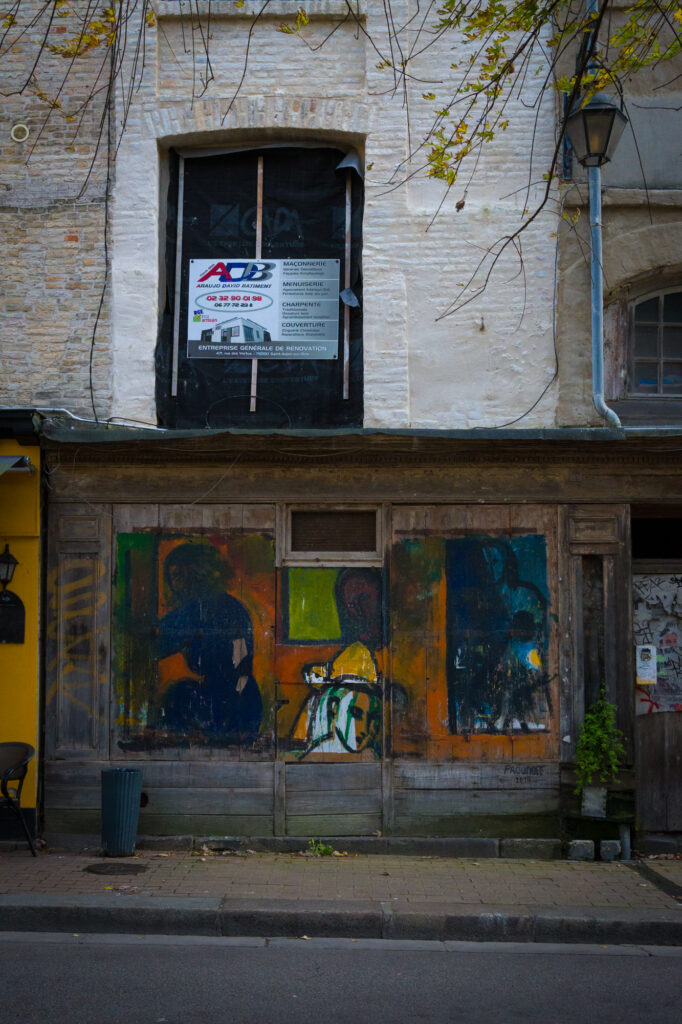
I came across a boarded-up storefront, its wooden panels covered with layers of paint and graffiti. Above it, behind the glass, a renovation sign hung crookedly, promising future improvements in neat letters. The contrast made me smile. Art below, bureaucracy above. One is impulsive, the other official. The two sides of every civilisation.
Andre Gide once said that we find authenticity only after we drop the roles we play. Standing in front of that weathered façade, I wondered if buildings feel the same freedom.
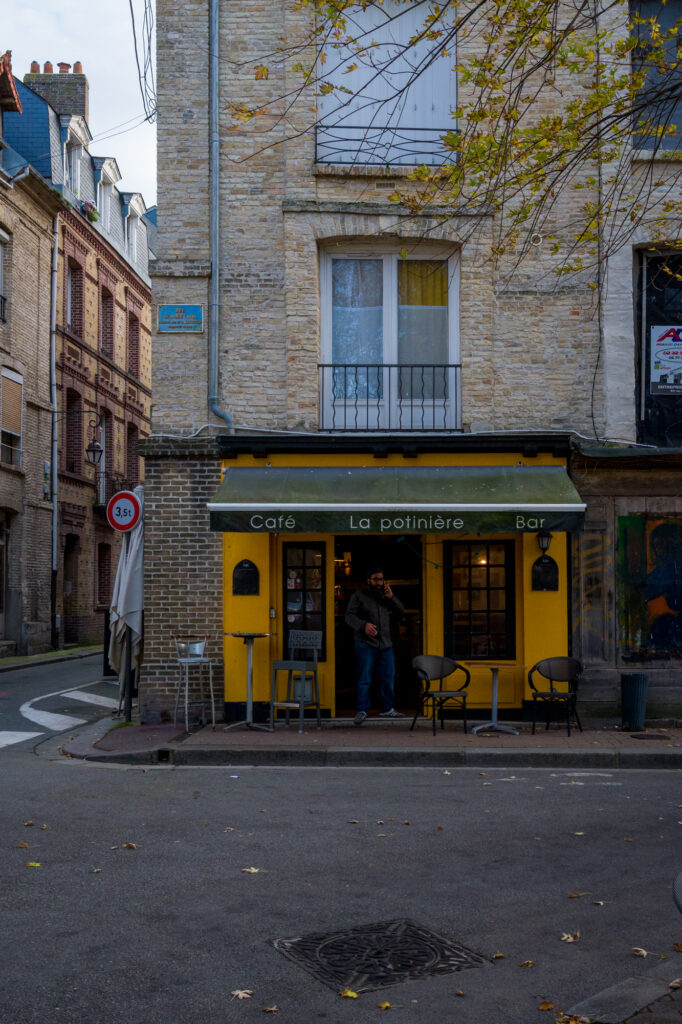
I turned a corner and saw a small café painted bright yellow, refusing to be subtle. Café La Potinière. A man stood outside, smoking, with the calm look of someone who had accepted the town’s pace. The yellow wall felt almost theatrical against the surrounding stone. I admired the choice. Every city needs at least one building that stands out.
Oscar Wilde would have agreed. Subtlety is often where the unimaginative hide.
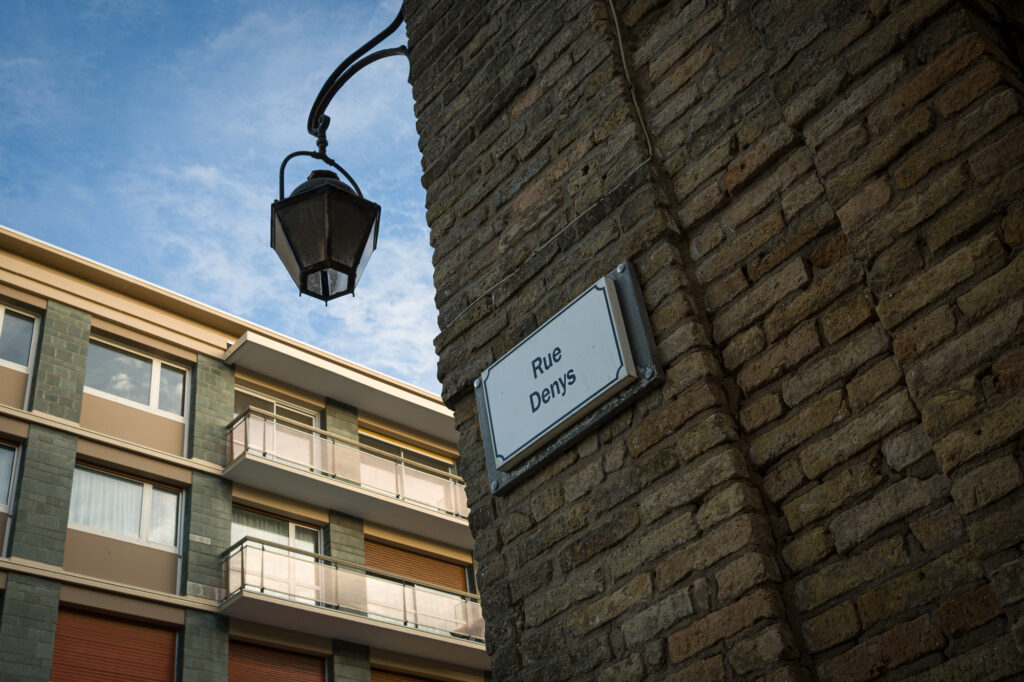
Further down, the streets narrowed again. A street sign said Rue Denys, fixed to an old brick corner under a curved iron lamp. Across the road, a modern apartment block stood, quietly ignoring the history around it. Cities, like people, gather contradictions rather than solve them.
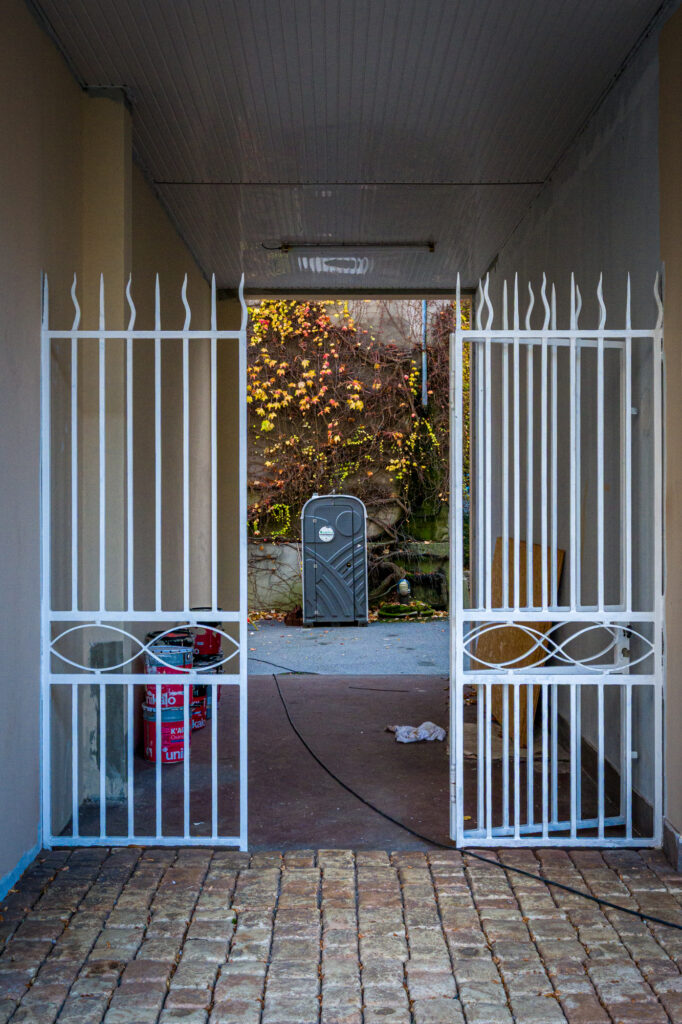
I passed through a small gate into a narrow passage. The white metal bars framed a strange sight. A portable toilet stood alone at the far end, surrounded by creeping autumn leaves and tangled plants. It looked both absurd and strangely poetic. Civilisation always leaves these small, practical marks behind its romantic image.
I laughed softly. The camera was still in my hand, but I waited before taking the shot. Experience has shown me that hesitation often captures the most honest image.
Eventually, the streets opened, and the sea appeared again.
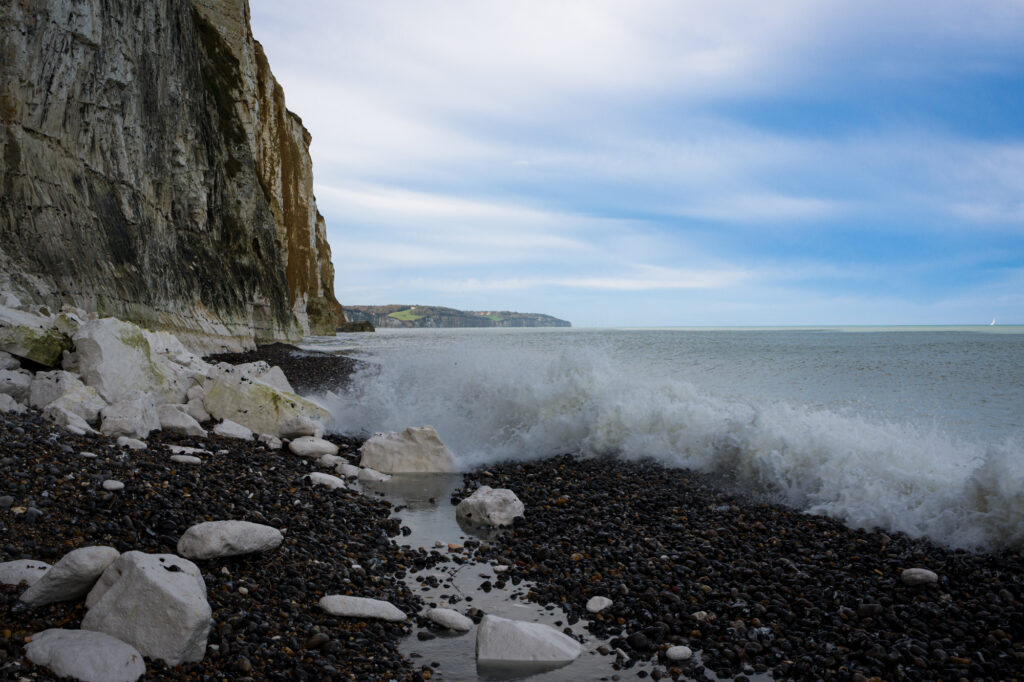
The coastline of Dieppe has a particular character. The white cliffs rise with quiet authority, as if the land itself has decided where the horizon should begin. At their base, the town settles into its practical routines. Cafés, promenades, and cyclists passing without urgency.
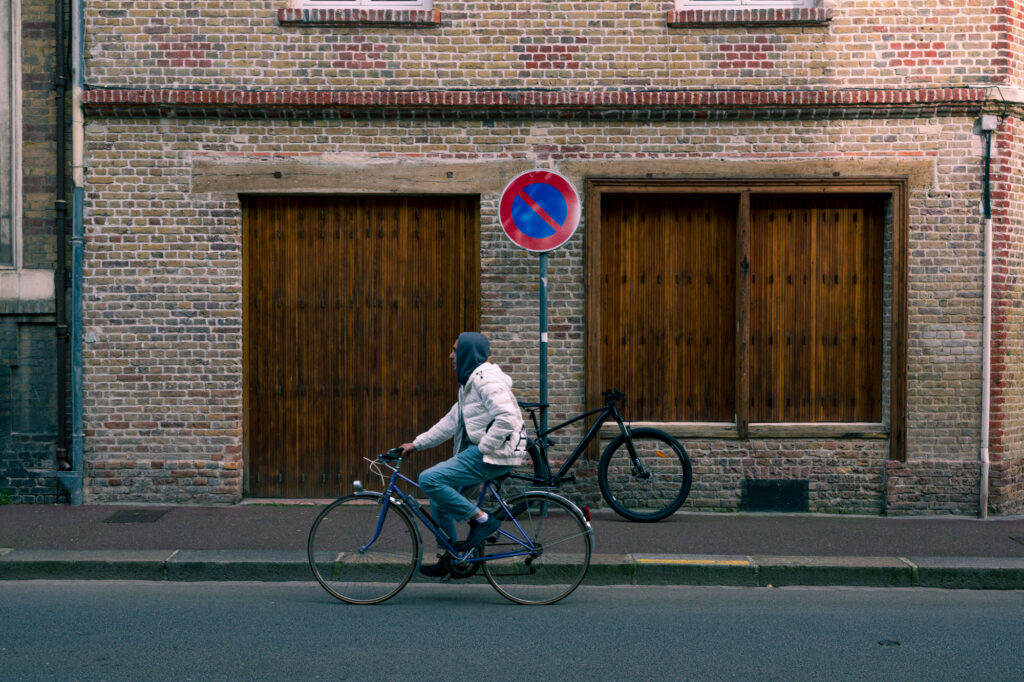
A cyclist passed me along a brick wall, pedalling with slow determination. No helmet. No hurry. Just movement. In cities like this, motion still belongs to the body, not the machine.
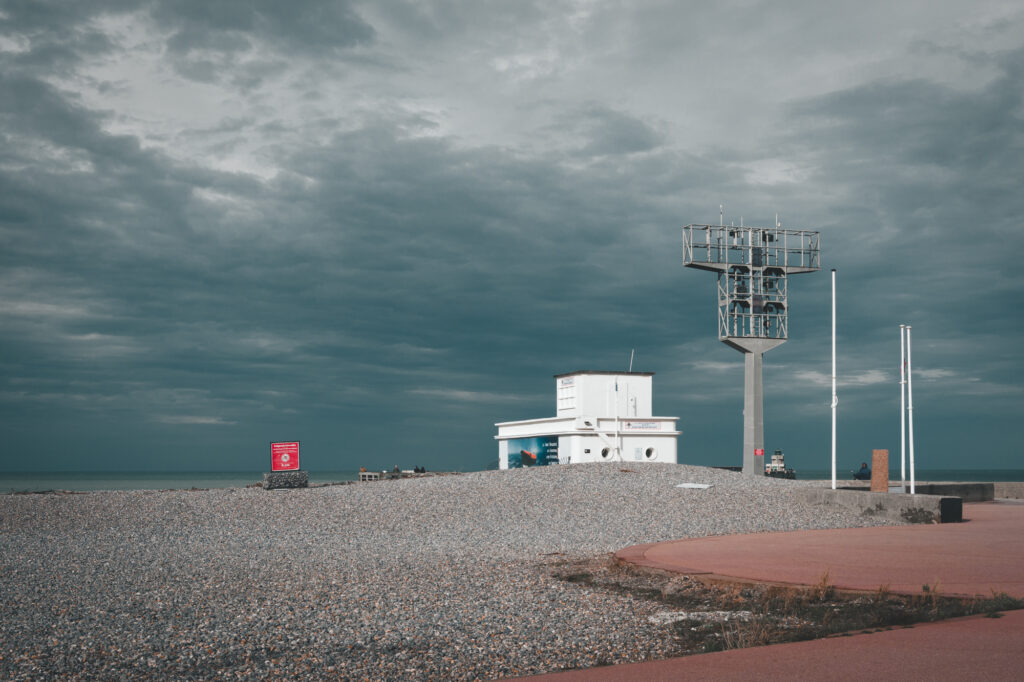
On the promenade, the harbour revealed its geometry. Radar towers, concrete platforms, and small structures were placed along the pebbled beach like thoughtful punctuation. The sea beyond stretched into a calm grey distance. Light moved across the surface in subtle layers.
Then the beach hut appeared.
It stood alone on the esplanade, covered in graffiti and bright colours. A cube of defiance against the calm horizon. Behind it, the water lay still, almost thoughtful. The hut seemed to exist just to break the landscape’s seriousness.
I walked around it slowly.
When I was twenty-five, I would have framed it as a composition. Now at fifty-five, I see it as a conversation.
Art doesn’t just decorate places. It reveals them.
The wind carried the smell of salt and wet stone. Behind me, a gull cried out loudly, as if protesting human creativity on its coastline. The cliffs stayed silent above it all.
I sat on a low wall and watched the light change across the harbour structures. The radar tower stood like a mechanical sculpture against the sky. A few people moved along the promenade, their footsteps small against the scale of the sea.
Coming back after thirty years changes how you see things. Memory lays over the present like a transparent photo. You see two Dieppe’s at once. The town from your youth and the town in front of you now.
Neither is entirely accurate.
What changes most isn’t the place but the person looking. Young people think places are waiting to be found. Older people know they were always there, indifferent to us.
I walked along the pebbled shore for a while, listening to the soft grinding sound stones make when waves pull back. It’s a patient sound. More geological than human.
I realised something simple.
The point of wandering isn’t to find new things. It’s to see familiar things without expecting anything.
The Dérive isn’t about moving through space. It’s about letting go of intention.
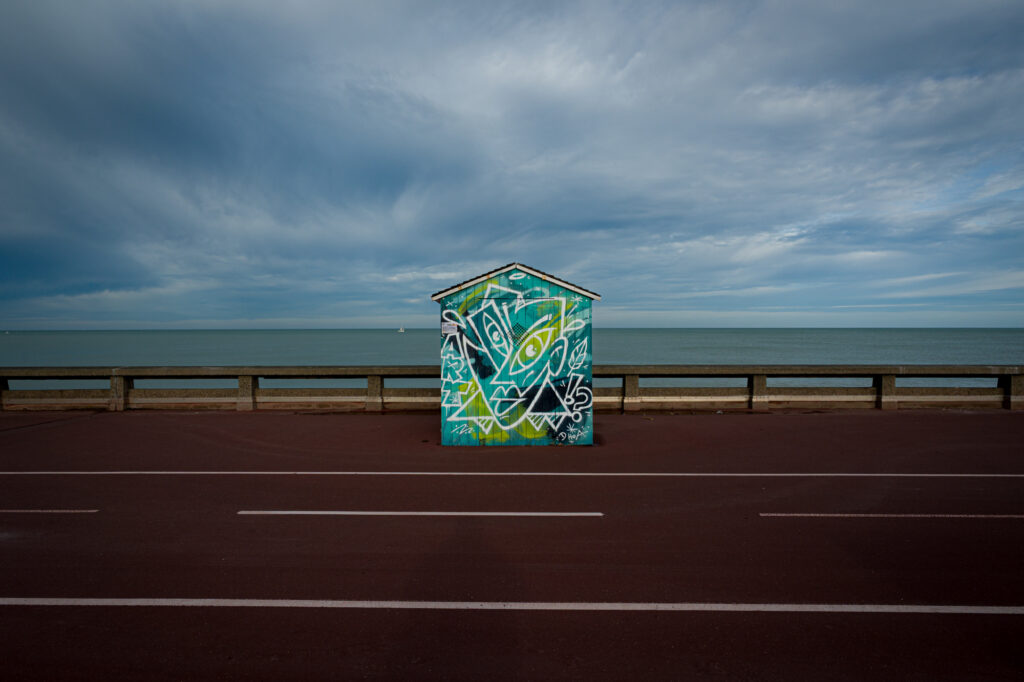
As the afternoon light faded, I felt a strange calm. Harbour lights appeared one by one. The sea turned a deeper blue. The graffiti hut stood alone against the horizon, stubborn and cheerful.
I turned back toward the town.
Thirty years had passed. The streets had grown older. The buildings had changed their colours. The harbour had rearranged its equipment.
Yet the essential character of Dieppe remained exactly the same.
Maybe that’s why I came back. Not to rediscover the town.
But to rediscover how I once saw it.
Publish the full editorial and associated images in your magazine, journal, or platform. Request tailored versions in different tones or formats. Book the author as a guest speaker for your event or programme. Contact the Author.
All images and text on this page are protected by copyright law. No part of this material may be reproduced, distributed, published, transmitted, modified, or used in any form or by any means, in whole or in part, without prior written permission. All rights reserved.